
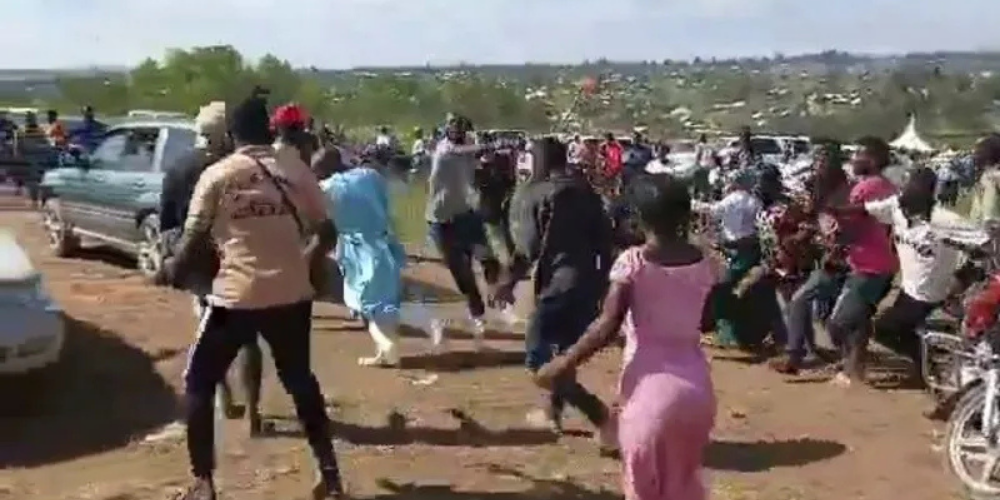
Ebola misinformation in DR Congo is turning deadly, with health workers describing brutal assaults by crowds who refuse to believe the virus is real. Daniel Uyirwoth Welo, a 27-year-old Red Cross volunteer, was among four colleagues injured last month when a mob attacked them during an attempted safe burial at a cemetery in Bunia, eastern Democratic Republic of Congo.
“They grabbed me from behind and started punching me, hitting me with spades and machetes,” Welo told BBC Verify. The violence erupted after rumors spread locally and online claiming the coffin they were burying was empty. Welo said some attackers insisted “Ebola doesn’t exist,” while others accused the Red Cross team of being there simply “to get money.”
The assault is one of several incidents tied to misinformation during the current outbreak, which government data shows has infected more than 1,750 people and killed 600 in DR Congo since mid-May. Rumors circulating in affected communities include claims that Ebola is fake, that health workers are intentionally infecting patients or harvesting organs, and that the entire response effort is a scam designed to generate profit.
BBC Verify has identified 12 separate cases of community resistance to Ebola containment measures, seven of which were confirmed through social media footage. These incidents range from attacks on treatment facilities to assaults on health workers and repeated interference with safe burial procedures, and the actual number is likely higher given that many incidents in remote areas go unreported.
In the most recent case, on 1 July, arsonists set fire to an Ebola treatment centre in Bafwabango, located in Ituri province, the epicenter of the outbreak. Local media reported that a police officer was killed during clashes over the body of someone suspected to have died from the virus. Because Ebola spreads through contact with infected bodily fluids and victims remain highly contagious after death, health workers have prioritized safe burials, a practice that has repeatedly triggered resistance amid unfounded claims that the disease isn’t real.
The current outbreak stems from the Bundibugyo strain, for which no approved vaccine or treatment currently exists, though the World Health Organization says a trial of two potential treatments is now underway, with experts cautioning results could take months. Response teams from aid groups and Congolese authorities have worked to prevent traditional practices such as washing or touching bodies, since funeral rites involving direct contact with the deceased have historically driven the spread of Ebola in past outbreaks.
Health officials say misinformation is actively sabotaging these containment efforts. In late May, rioters set fire to equipment and two isolation tents at a treatment centre in Rwampara after relatives of a young man believed to have died from Ebola were blocked from removing his body for burial. Since then, medical facilities have reportedly been attacked or vandalized at least three additional times.
Funerals hold deep cultural and spiritual significance in DR Congo, often unfolding over multiple days. “Women are dressed in a wedding dress with make-up… They sing, they celebrate that person, because it’s a journey, it’s not the end of the life,” anthropologist Julienne Anoko, who works with the WHO as a community engagement officer, explained to the BBC.
Dr Aimé Mbonda Noula of the International Federation of Red Cross and Red Crescent Societies said fear of quarantine has driven some families to flee their homes and abandon a deceased relative’s body rather than alert authorities. “Most of the people in these communities think that these treatment centres are places where, when you go, you die,” he said, adding that this belief pushes people to avoid health workers entirely.
Others object specifically to changes in burial customs. “They don’t believe that safe, dignified burials could really help,” said Dr Babou Rukengeza of Save the Children, describing families who feel entitled to a final physical goodbye with their loved ones. Last month, two Ebola response workers were attacked in North Kivu province by residents who blamed them for local deaths, with video verified by BBC Verify showing a female health worker fleeing men wielding wooden planks, and a separate clip showing a man in medical scrubs being pelted with stones while crawling along a road.
A recent assessment by the charity ActionAid found that roughly a third of respondents in Ituri did not believe Ebola was a real disease, instead attributing it to spiritual causes or sorcery. “Ebola misinformation is Ebola’s greatest ally,” said Dr Wessam Mankoula of the Africa Centres for Disease Control and Prevention, warning that false rumors delay treatment and fuel violence against health workers, giving the virus more room to spread.
Experts trace much of the distrust to decades of instability in eastern DR Congo, shaped by prolonged conflict, foreign interference, and competition over valuable minerals like gold and coltan. “You have a very strong base of being very distrustful of anything coming from outside, including the central government,” said Dr Jean-Vivien Mombouli, who has advised regional governments on Ebola response. Health officials say containing the outbreak now depends as much on rebuilding community trust as on medical intervention itself.


